
How it works
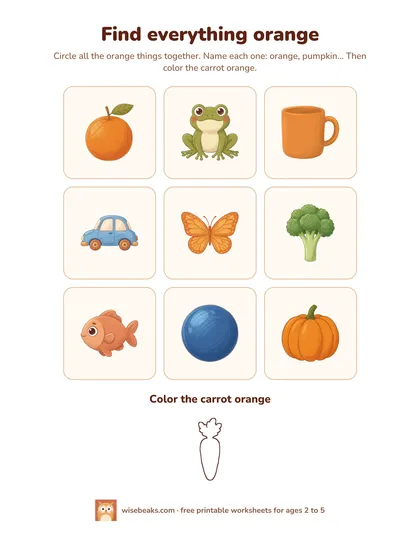
- The sheet is printed, and a grown-up sits next to the child.
- The grown-up points to the orange: “The orange is orange. Where else is something orange?”
- The child circles or points to each orange thing, and the two name each one together.
- At the end, the child colors the carrot. Picking another crayon is part of it, and then the question is: “Is this carrot orange now?”
Why there is no red or yellow
Orange sits between red and yellow, so little kids easily mix it up with them. That is why the other things on this sheet are blue and green, clearly different. Once a child finds orange for sure, a carrot and a tomato side by side make the next question: “Which one is orange?”
By age
- Age 2: pointing is enough. The grown-up names, the child points.
- Age 3: the child circles and tries to say “orange”.
- Ages 4 and 5: counting the orange things (there are five). Then: “Which of the orange things can we eat?”
Away from the paper
After the sheet, orange in the kitchen: a carrot, a tangerine, a pumpkin. After the other color sheets, a row of toys in different colors and the question: “Which one is orange?”