The order kids learn colors in
Learning colors happens in three steps, and each one can take weeks.
- Matching. The child puts a red block next to a red block. They don’t know the word yet, but they see that the two are the same.
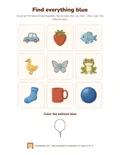
- Recognizing. Asked “Where’s the blue one?”, the child points to something blue.
- Naming. The child says “red” on their own when they see a red apple.
The second step usually comes long before the third. A child who points to the right color but can’t say it yet is right on track.
Which colors come first

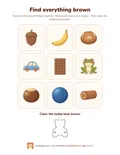
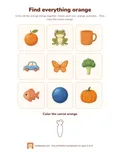
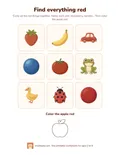
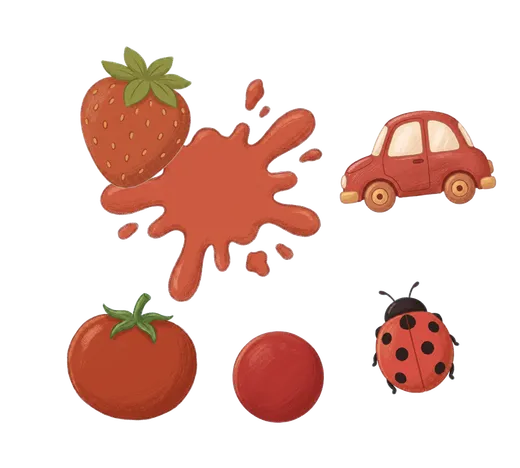
One color at a time is easier than all of them at once. Red is a good first color because it is clear and everywhere: strawberries, tomatoes, toy cars. Blue and yellow often come next, then the other basic colors, such as green, orange, pink and purple. Brown and gray usually come last, around age four. Many kids still mix up in-between shades, like the ones between pink and purple, at five, and every child goes at their own pace.
Color games at home
- Color of the day. One day is a red day: red things in the kitchen, on clothes, on a walk.
- Tidying up by color. Toys of the same color go in the same box. Tidying up turns into a matching game.
- Color walk. Outside, counting red cars or yellow leaves.
- Picture books. “What’s blue here?” asks a child to point. “What color is this?” asks them to name it, which is harder.
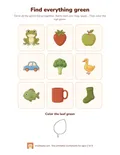
- Coloring. The child picks a color for the apple and says its name.
What doesn’t help
- Quizzing. “What color is this? And this one?” quickly turns into a test. Naming in passing works differently: “You’re taking the red cup.”
- Too many colors at once. One new color a week is plenty.
- Correcting every mistake. Repeating the right word is enough: “That’s a green leaf.”
When mixing up colors is normal
Until about age four, many kids still mix up some colors, especially blue and green, or orange and red. That is normal.
If a five-year-old consistently can’t tell red from green but knows everything else, a pediatrician is the person to mention it to: telling those two colors apart is harder for more boys than girls.
How Wise Beaks teaches colors
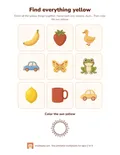
In Wise Beaks, every color has its own short lesson. First the child rubs a gray splash until it turns red and hears the word, then looks for red things, discovers one fun fact (a strawberry has its seeds on the outside), picks between two colors, and at the end colors a drawing of their own. Every instruction is spoken by a real person, so a child who can’t read yet can play alone.