The order kids learn shapes in
For little kids, shapes are not a school subject but part of every day: a plate is round, a window is square, a slice of pizza is a triangle. Kids learn shapes the same way they learn colors, in three steps.
- Matching. The child pushes a circle into the round hole of a shape sorter. They don’t know the word yet, but they see that it fits.
- Recognizing. Asked “Where’s the triangle?”, the child points to the triangle.
- Naming. The child says “circle” on their own when they see the clock on the wall.
Recognizing usually comes long before naming. A child who points to the right shape is right on track, even before they can say it.
Which shapes come first

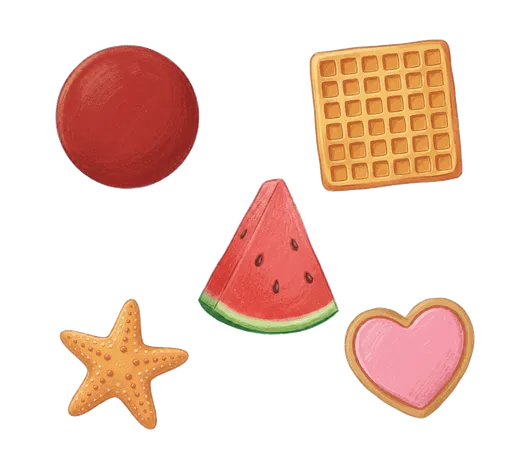
The circle is a good first shape. It is easy to recognize and everywhere: balls, wheels, oranges. The square and the triangle often come next. The star and the heart are not geometric shapes in the strict sense, but kids love them and remember them easily, so they make a good next step. Ovals, rectangles and diamonds come later, and many kids still mix them up with circles and squares at five.
Shape games at home
- Shape hunt. One shape a day: today only circles, like plates, clocks, buttons and stroller wheels. Tomorrow squares.
- Shape sorters and boxes with holes. The child tries which shape goes through which hole. Hands learn before words.
- Shape in a bag. A block and a ball in a cloth bag. The child feels and guesses which is which.
- Pictures from shapes. Paper circles become a caterpillar; a square and a triangle become a house with a roof.
- Cookie cutters. When baking, the child picks the star, the heart or the circle and says its name.
- Drawing. A circle is the easiest first drawing. Squares and triangles need corners, so they come later.
What doesn’t help
- Always the same triangle. If a child only ever sees a triangle pointing up, a turned triangle can look like something new. Shapes that show up big and small, turned around and in different colors teach more.
- Quizzing. “What shape is this? And this one?” quickly turns into a test. Naming in passing works differently: “Here’s the round plate.”
- Too many shapes at once. One new shape a week is plenty.
When mixing up shapes is normal
Kids learn shapes at their own pace. Many three-year-olds recognize a circle, and name squares and triangles for sure only at four or five. Mixing up squares and rectangles, or circles and ovals, is common at that age.
If something about your child’s development worries you for a long time, a pediatrician is the right person to ask. Learning shapes more slowly is not a reason to worry on its own.
How Wise Beaks teaches shapes
In Wise Beaks, five shapes have their own short lesson: circle, square, triangle, star and heart. Circle, square and triangle open from age two, star and heart from age three. In the games, Shapes is open from age two: a two-year-old matches two of the same shape, and tasks where the child picks a shape by its name come later.
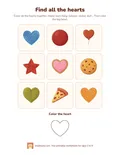
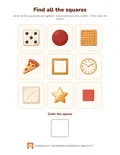
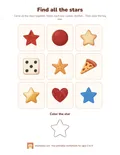
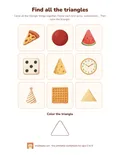
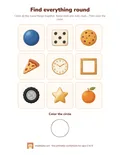
Every lesson goes in the same order. First the child traces the shape with a finger, then finds all the things of that shape among other things. Then they discover something with the same shape (the sun is round, like a circle) and pick the right shape between two similar ones, for example a circle and an oval. At the end they build a picture from the shape, in the circle lesson a caterpillar, a snowman or a traffic light, and color it.
Every instruction is spoken by a real person, so a child who can’t read yet can play alone.